Kgosi Lucas Manyane Mangope was both loved and hated, praised as a visionary leader who built the Bophuthatswana government, but he was also perceived as a sell-out who was cosy with the Apartheid government.
Oupa Segalwe has penned a biography on Tautona as he was known. Thaba Nchu in the Free State formed part of the Bophuthatswana government that Mangope ruled.
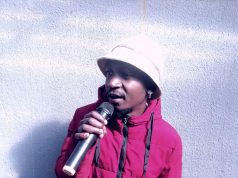
Oupa was born and raised in the same rural village as Kgosi Mangope. He said to him and fellow villagers, Mangope was not just their president under the Bophuthatswana homeland but their traditional leader too.
“Around the time Bophuthatswana went belly up, I was 10 years of age. I recall the conversations that took place back then, both in my household and out in the streets. At home, he was revered and spoken of in glowing terms.” Segalwe reiterated.
He further said his grandfather worked for Mangope and he was often compared to the likes of Nelson Mandela by the elders.
As a youngster, Segalwe heard conversations about the development Kgosi Mangope had brought in the form of unparalleled infrastructure, a vibrant economy, jobs, non-racialism and so forth for the people of Bophuthatswana and that Mandela and his fellow comrades were coming to take away all those good things that Mangope’s government had done and built for the people of Bophuthatswana.

ADVERTISEMENT
“However, further afield in the village there were mixed reviews about Mr Mangope’s time at the helm of the homeland. People spoke about how high-handed he was and how much of a dictator he was. They also referred to the governance lapses and excesses of his administration. I grew up struggling with this contradiction.” Said Segalwe.
According to the author, In later years, he noticed how South Africa’s political literature tended to tell stories of those who were at the forefront of the liberation struggle to the exclusion of others such as Kgosi Mangope.
Segalwe believes that the story of South Africa’s transition from apartheid to democracy should be told in full. Whether the subjects are heroes or villains and the in-betweens is neither here nor there.
It took Segalwe a decade to complete the manuscript. This is largely due to the fact that this was an on-and-off project and he struggled with sources and publishers. At one point he abandoned the project for two years only to get back to it again after a burst of inspiration, triggered by unrelated events.
“One of the biggest challenges was that I could not interview Kgosi Mangope to reflect on his contentious legacy. I suppose I left it too late. He was already frail when I commenced work on the book. I did sit down with him on two occasions, but I couldn’t get anything out of him. His memory appeared to fail him. I later learned that he had dementia.” Said Segalwe.

He relied on secondary sources. His family, his old colleagues in the Bophuthatswana cabinet, leaders of the United Christian Democratic Party, ANC leaders such as Popo Molefe and Mathews Phosa, other politicians such as Mangosuthu Buthelezi, FW de Klerk, Supra Mahumapelo, among others, as well as newspaper archives, records from libraries, court judgments and official government documents.
Mangope was a polarising figure. His legacy divides opinion every time. He had as many fervent supporters as he had detractors. And then there are those who are neutral, who are of the view that he was an imperfect man who tried and that he should be cut some slack.
The author reiterated that, Mangope should be seen as human. Humans are inherently fallible. His good deeds must be acknowledged but, in the same vein, his blunders must not be covered up.
Segalwe details his interaction with Tautona in his book. He tells his legacy and story as it happened, to the best of his ability and relied on the information that was before him. The highs and the lows.
But the story is not limited to Bophuthatswana. Kgosi Mangope had a life prior to and post Bophuthatswana. In essence, this is his cradle-to-the-grave story.
One cannot write about Bophuthatswana and not refer to the regions that made it up such as Thaba Nchu and modern day North West province.
Mangope died at his home in Motswedi, Lehurutshe on 18 January 2018, aged 94
“The reception has been very satisfying. Reviews have been quite positive. It has been interested to go through social media comments of the various people who have read it. The views are reflective of Kgosi Mangope’s polarising persona.” Segalwe added.
The book is available at all reputable bookstores such as Exclusive Books and Bargain Books. Virtual stores such as Takealot also have stock.
#BeTheFirstToKnow