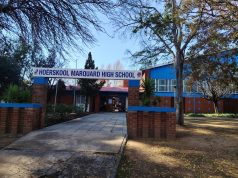
Four Free State Schools; HTS Louis Botha, Lenakeng Technical School, Lekgarietsi Secondary School, and Tiisetsang High School are among the Top 20 schools that will compete in the Samsung and SITA 2024 Solve for Tomorrow Competition.

The State Information Technology Agency (SITA) has joined hands to launch the 2024 Solve For Tomorrow Competition, aimed at bringing the best out of public schools and learners.
The competition has attracted a large number of entries from schools across the country, with the Top 20 schools officially announced.
The competition challenges schools to showcase their innovation and creativity in solving real-world problems.
Launched in Africa in 2023, this unique competition provides an opportunity for grade 10 and 11 learners from public schools in underserved communities to apply Science, Technology, Engineering, and Math (STEM) education to address the challenges faced by their respective communities while fostering creative thinking, problem-solving skills, and teamwork among learners. Its goal is to nurture socially innovative ideas, with a specific emphasis on environmental challenges.
“As a global electronics giant that has, in the past 30 years consistently been supporting the country’s transformation agenda, we are well aware of the great importance of education through technology. This global Solve For Tomorrow initiative which uses STEM as the critical component of empowerment is helping us, together with our valued partners, to continue our quest of equipping young people from local public schools with critical skills and knowledge that they will need to not only build a better local economy, but also the world at large.” Said Lenhle Khoza, B-BBEE and Transformation Manager at Samsung.
Since its inception last year, the competition has helped learners grow and develop invaluable skills for success in the present and future.
In conjunction with SITA, 51 pre-selected schools were piloted nationally. This competition is an excellent way for learners to gain a deeper understanding of STEM and display their scientific talents.
The Top 20 Finalists will be required to submit paper prototypes of their solutions, which will be evaluated by judges to determine the Top 10 schools that will proceed to the next phase.
The Top 10 teams will receive funding to develop physical prototypes of their solutions and present them to a panel of judges in the final stage of the competition.
The Top Three schools with the winning prototypes will win cash prizes of up to R100,000 each, which will go towards STEM equipment based on the unique needs of each school.
#BeTheFirstToKnow